History
Where It All Began: The Rise of a Paper Mill
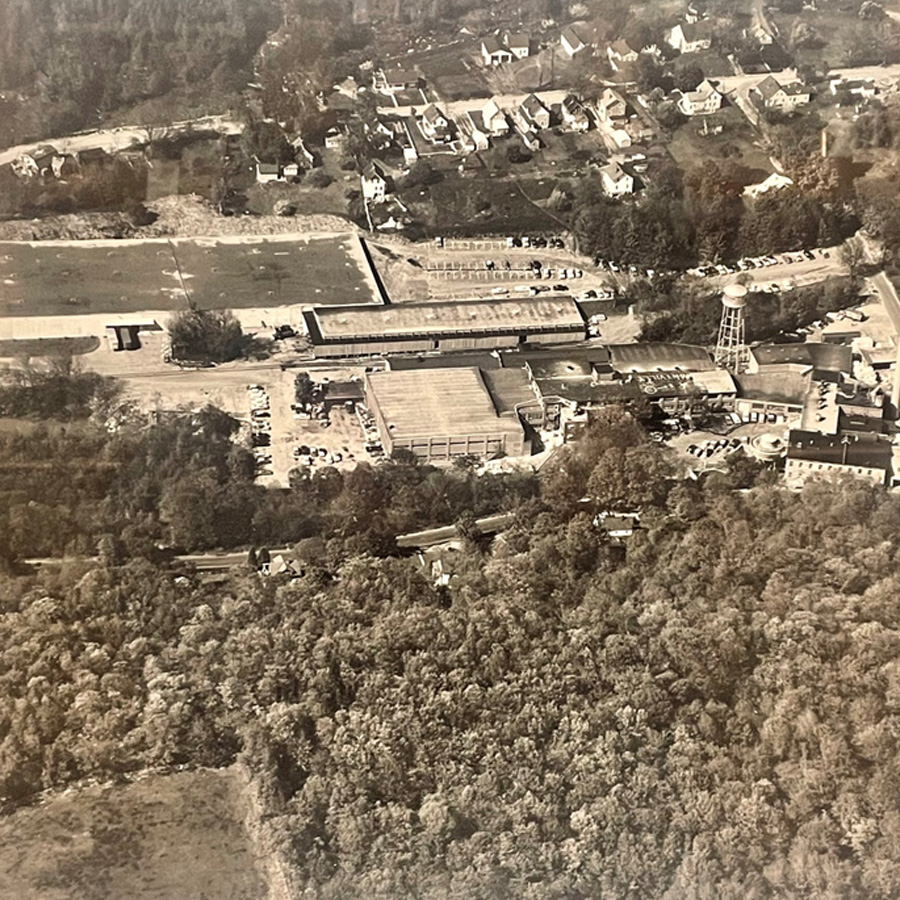
The story of RWCB’s current site began in 1850 as a modest sawmill. Over time, it expanded through innovation into paper production and folded box manufacturing, steadily growing into a major operation. In the 1980s, the site entered a new era under the ownership of The Kraft Group and in 1994 the Kraft Family transitioned to paper manufacturing, continuing this legacy with a strong foundation in family values and manufacturing excellence.
The timeline below traces the mill site’s history – from its humble beginnings in 1850 to its evolution into a leader in paper manufacturing.
1850–1900
SECOND INDUSTRIAL REVOLUTION
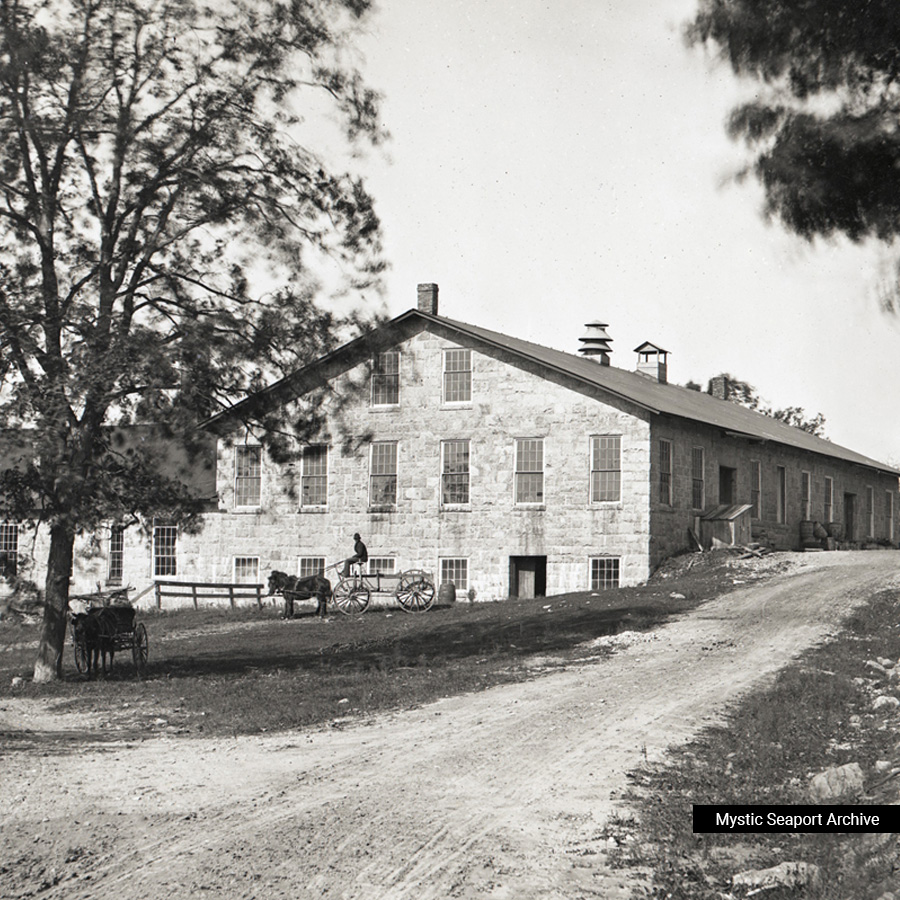
1850
Local resident John Smith builds the first sawmill on the present-day RWCB site to meet growing demand for paper production.
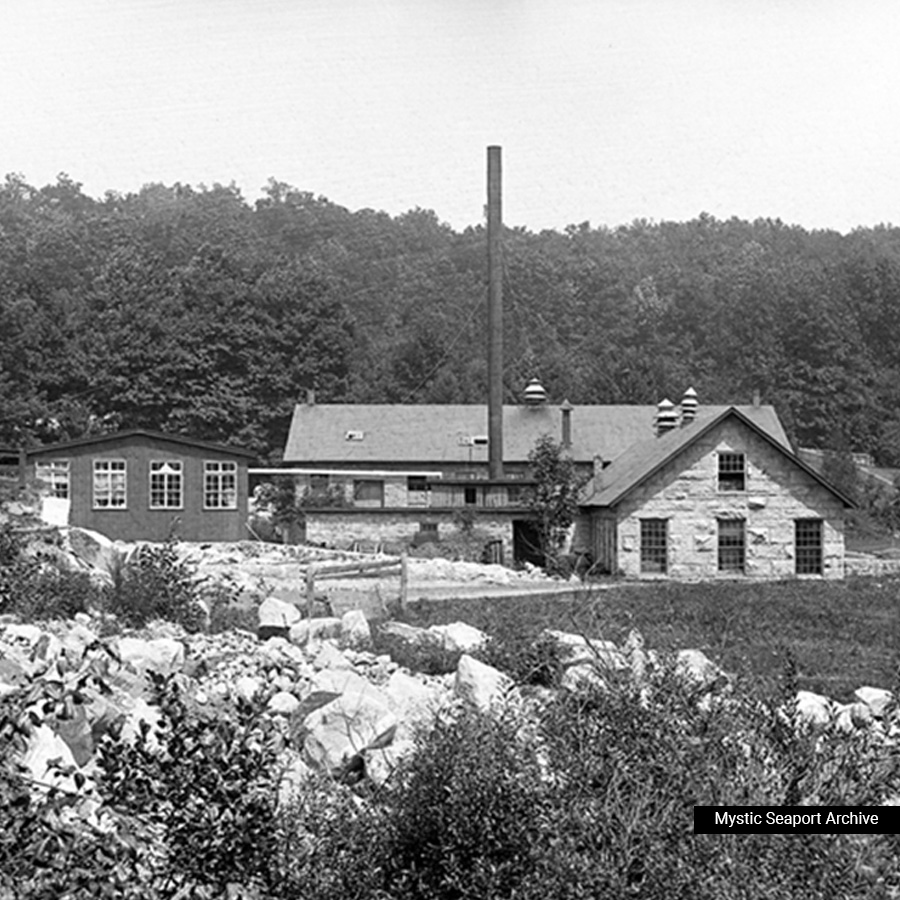
1859
The Montville Paper Co. is formed, shortly after its incorporation into the Rockland Paper Co., at a time when textile mills were also emerging in the area – marking a broader maturation of the town’s manufacturing sector.
Mill Proliferation and Scale
Montville’s most concentrated mill growth paralleled the national shift to steam power, rail expansion, larger workforces, and higher output.
1888
Carmichael Robertson passes away and is replaced by sons Alexander, William, and
Tyron. Paper production reaches two tons per day.
1873
Carmichael Robertson, a major 19th-century leader in the paper industry, takes over Rockland Paper Co.
1868
The original mill burns down and is replaced by a stone structure.
Oxoboxo River Industrial Belt
By 1870, 13 manufacturing firms operated along the Oxoboxo River, employing roughly 10–85 workers each and producing woolens, cotton, silk, dyes, oil goods, bicycles, and specialty items.
1897
The Rockland Paper Co. purchases the Rex Box Co. (current site of the RWCB office building) and enters the folded paper box market.
Villages, Change, and Legacy
As steam power increasingly supplements water power, mill villages shaped daily life, while recurring shifts in ownership and production tracks cycles of competition and downturn - together leaving a lasting architectural legacy.
1900 - 1980s
INDUSTRIAL MODERNIZATION
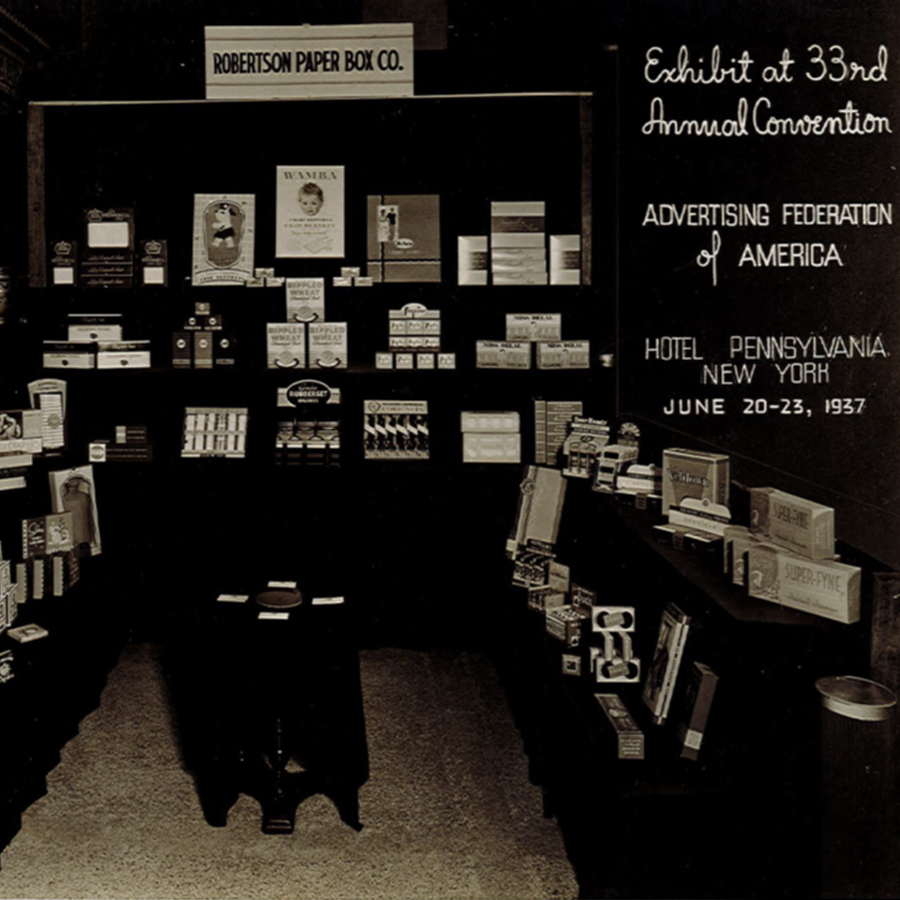
1916
The company is restructured as The Robertson Paper Box Co., as the Robertson heirs sell the firm to Boston investors. Despite these changes, the company’s fortunes decline.
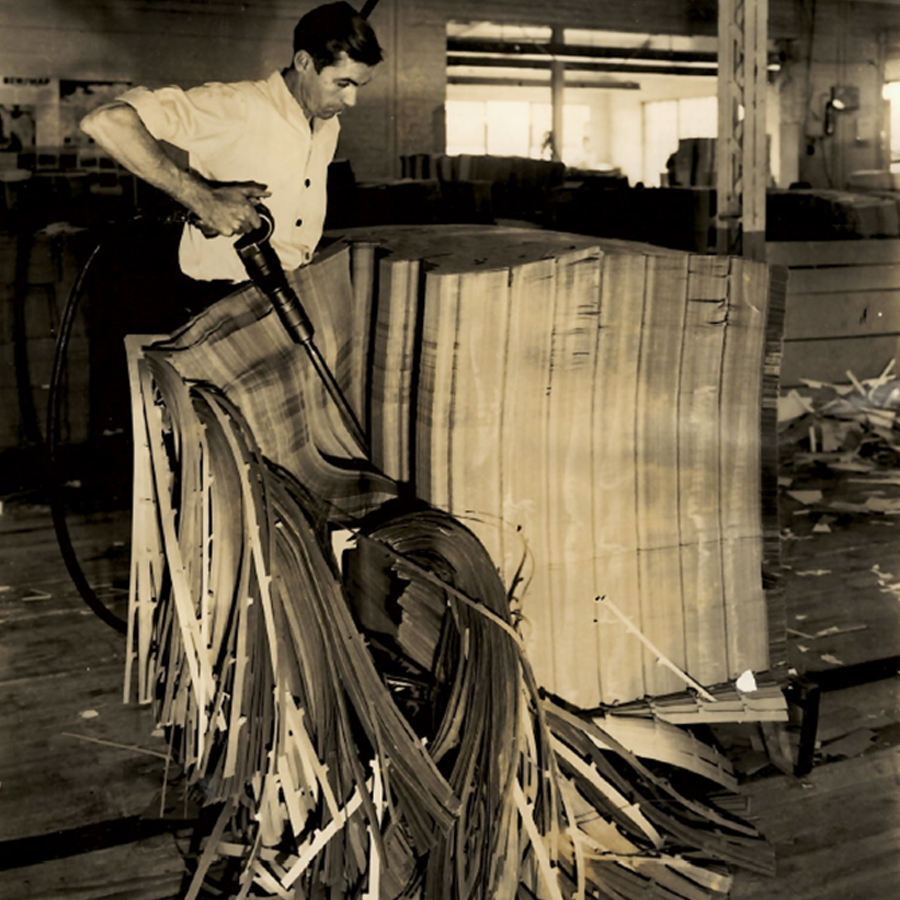
Electrification
Electric power reduces reliance on water flow, allowing more flexible layouts and longer operating hours across Montville’s mills.
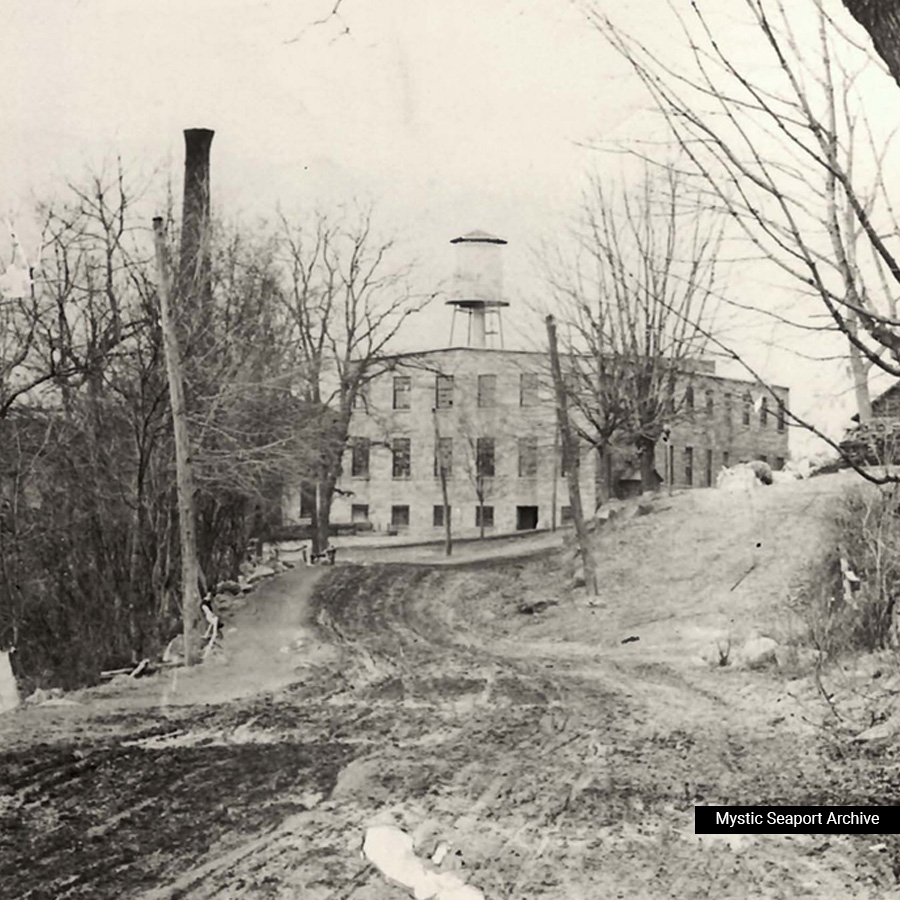
1913
The last of the Robertson brothers passes away.
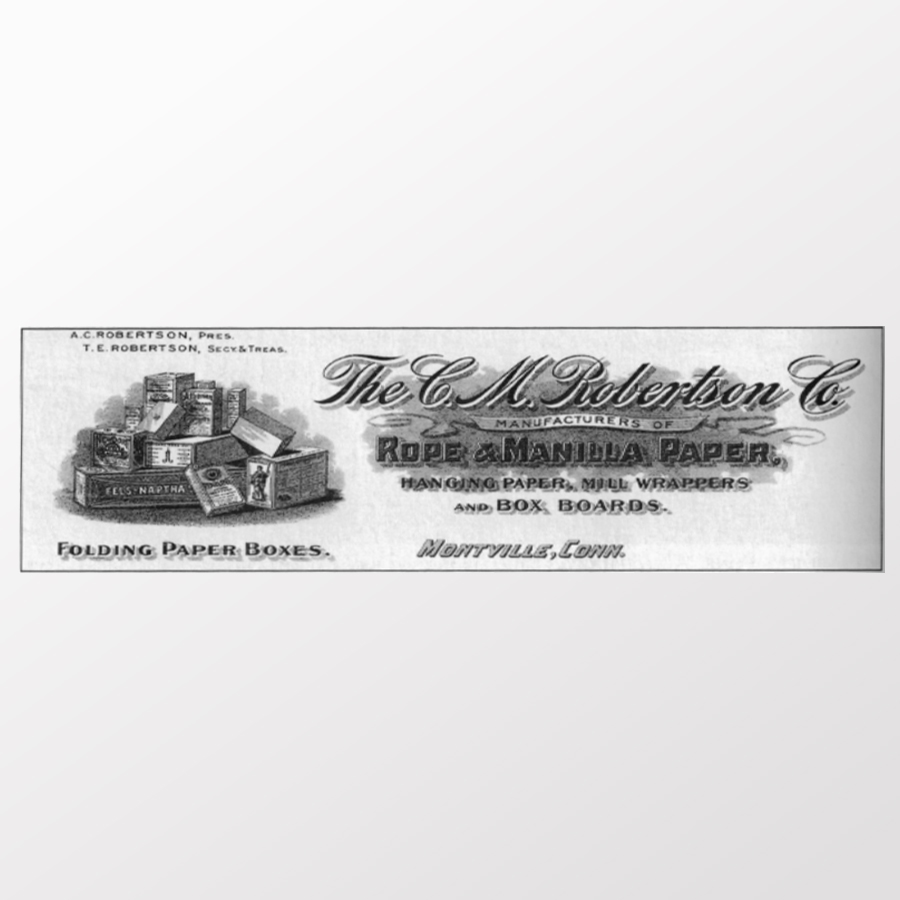
1902
The mill is reorganized as the C.M. Robertson Co.
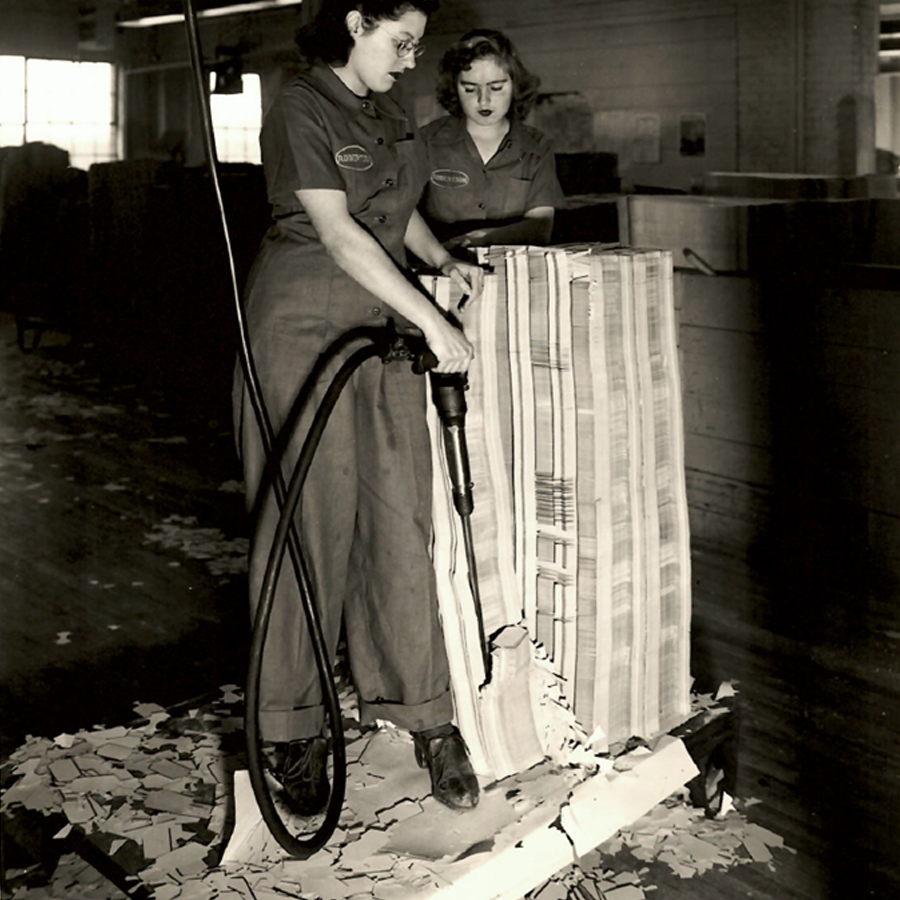
1921
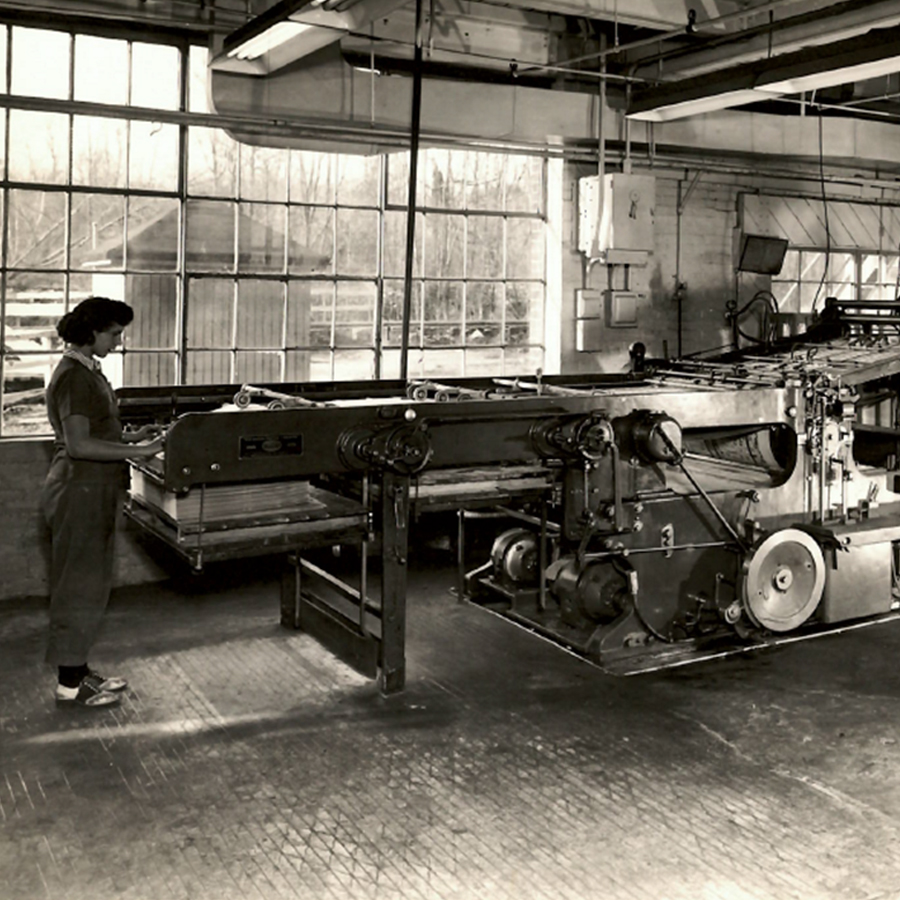
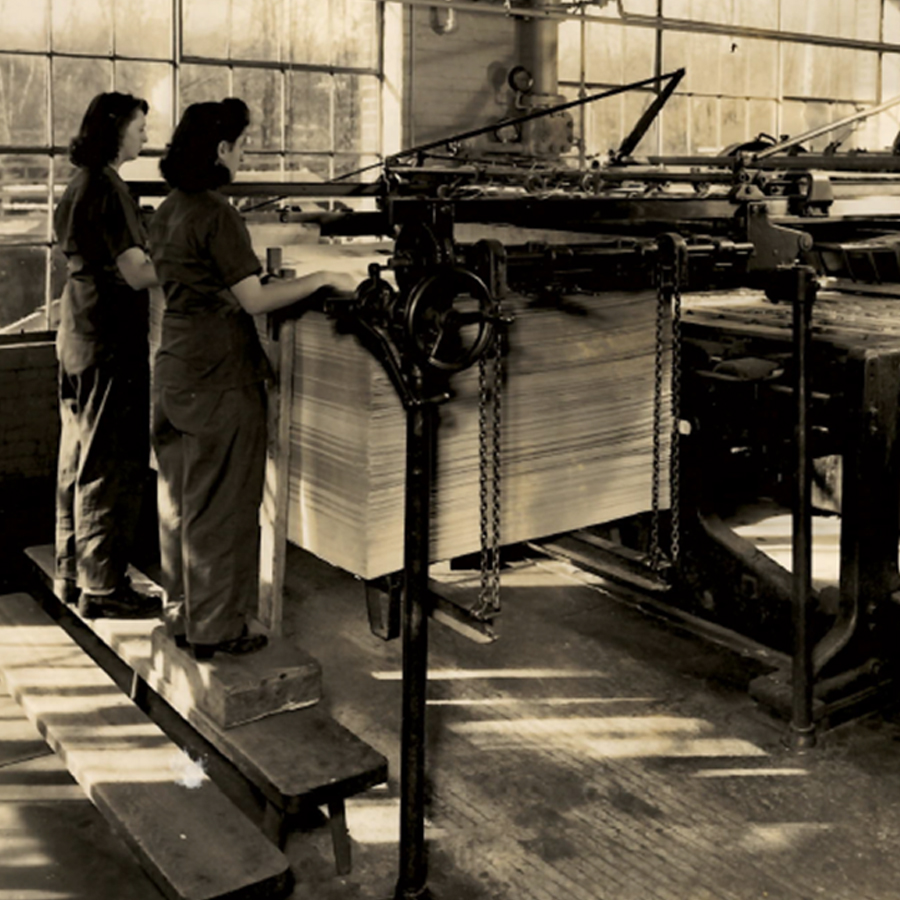
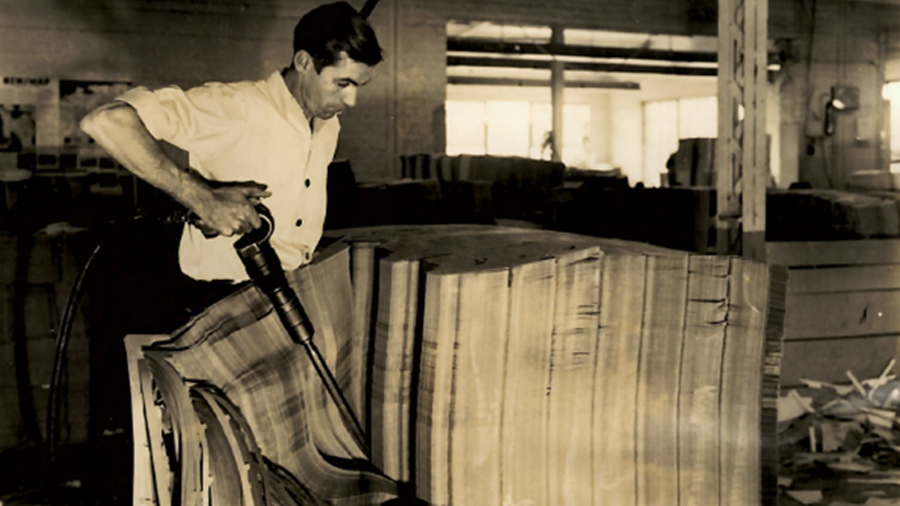
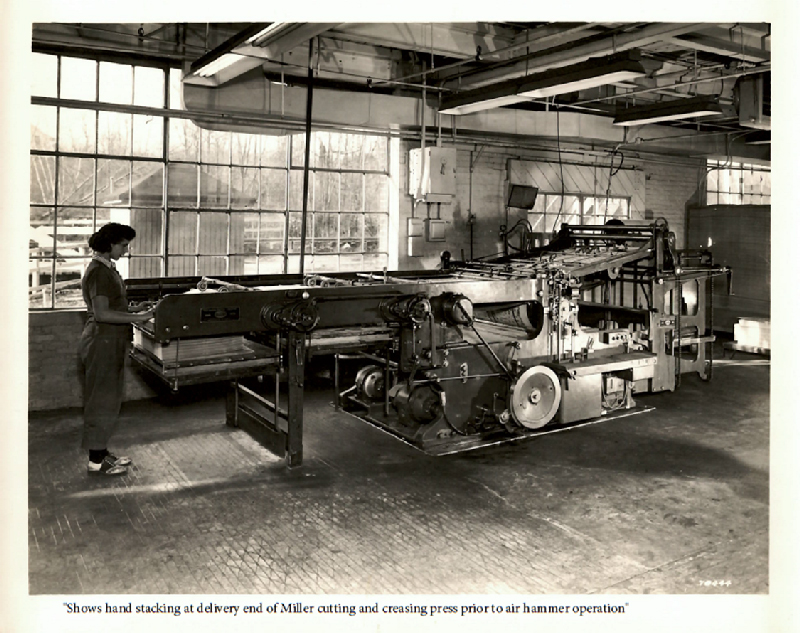
After several difficult years, a majority interest is sold to 27-year-old Ralph Powers. He appoints himself president and general manager, and production rises to 14 tons per day.
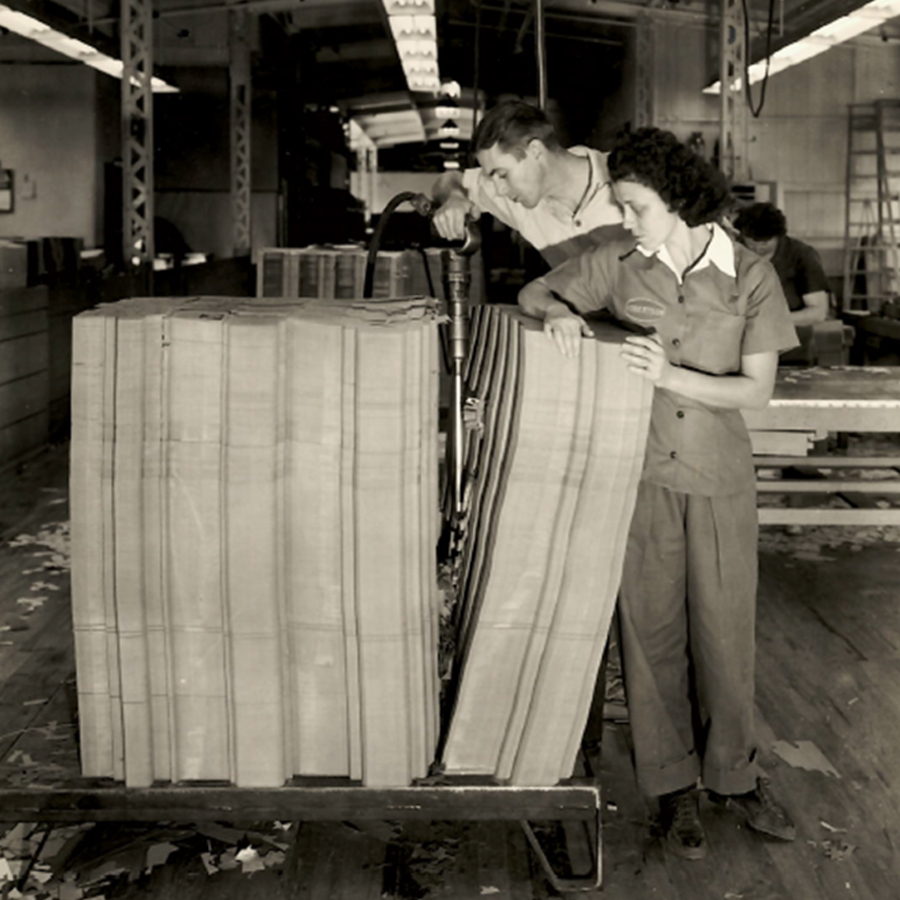
1925
The Robertson Paper Box Co. returns to profitability and gradually expands operations. The campus and capabilities continue to grow.
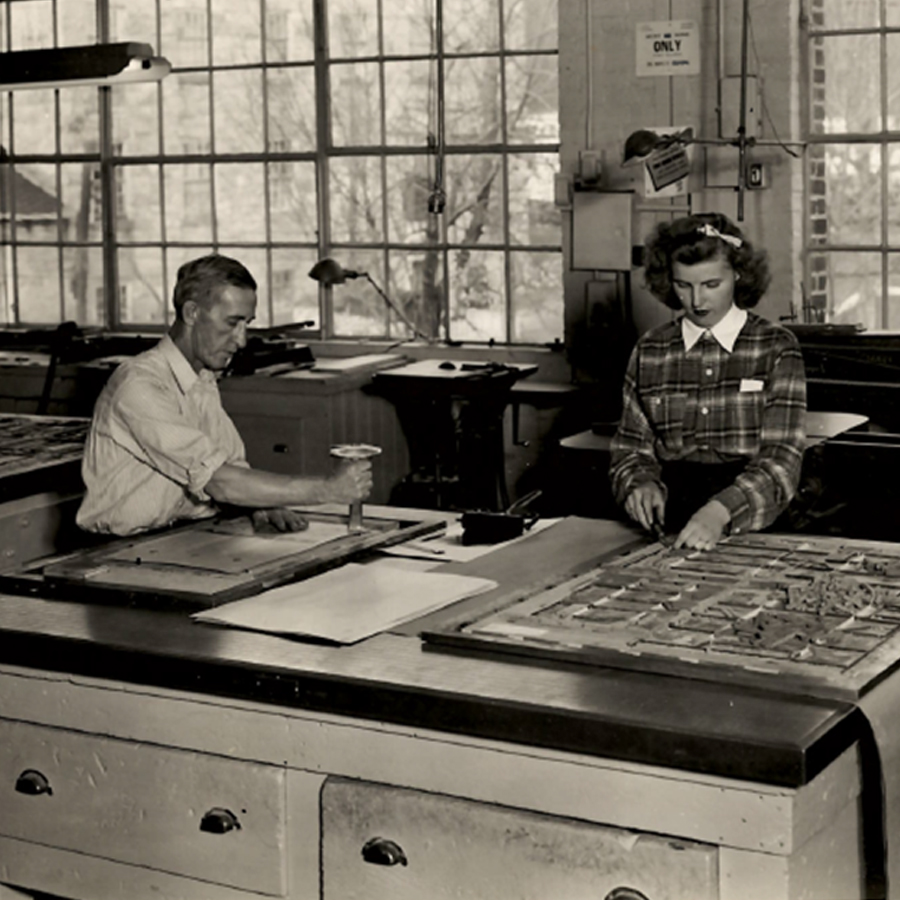
Synthetic Textiles
Under the Sidney Blumenthal Company (from 1911), the Uncasville‑Shelton facility produced silk, rayon, and plush—early adoption of new fibers reshaping U.S. textiles.
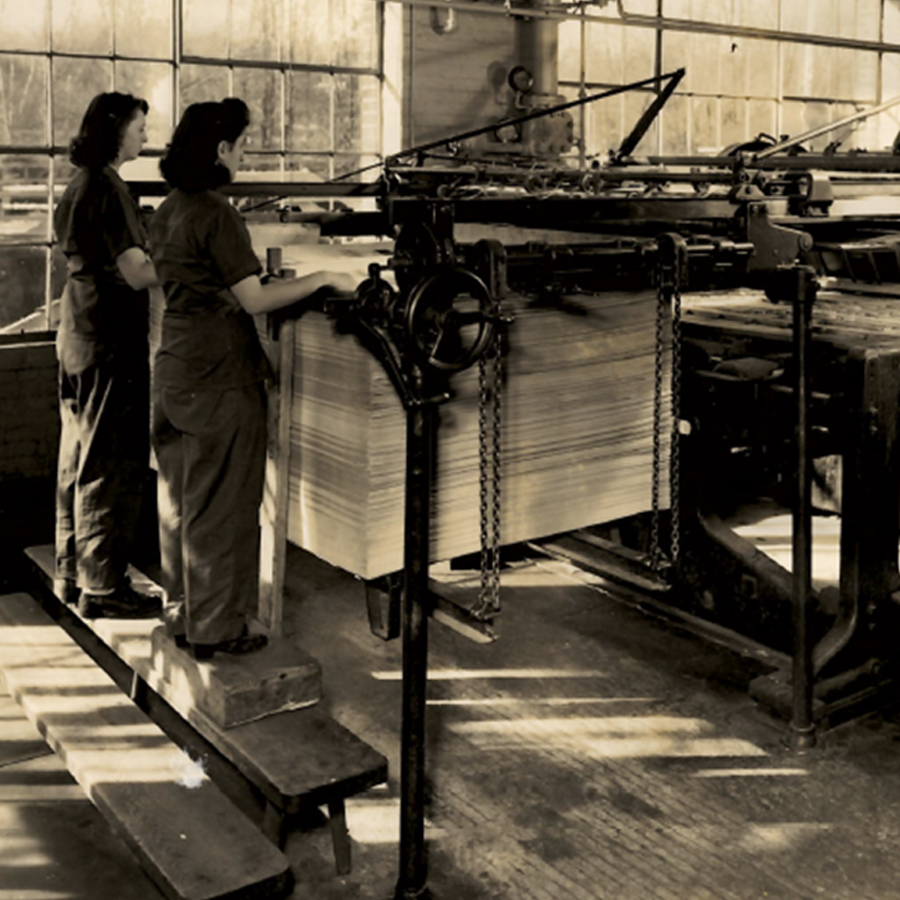
1941 - 1945
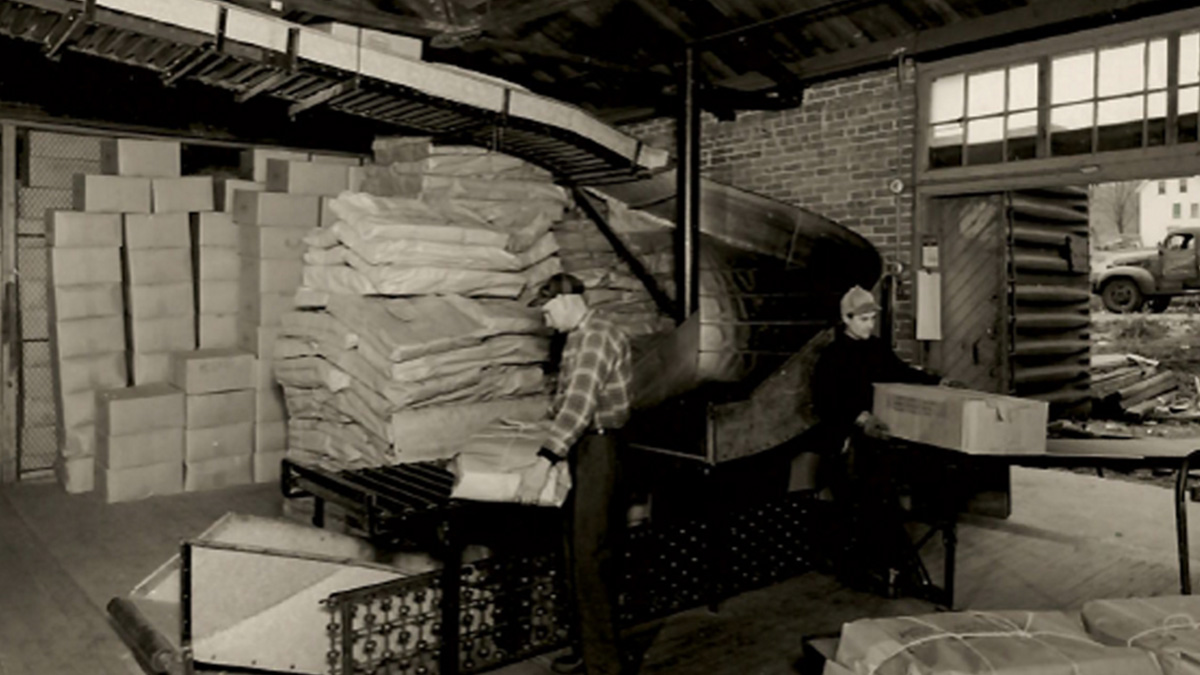
WWII efforts. Innovations from the site included replacing tin containers with paper. Powers serves as Director of War Production Paper Board Division.
Paper & Wartime Pressures
Paper manufacturing expanded with demand for packaging and print; 1930s–40s records show a large workforce including immigrant labor. WWI/WWII shaped priorities, labor, and investment.
1954
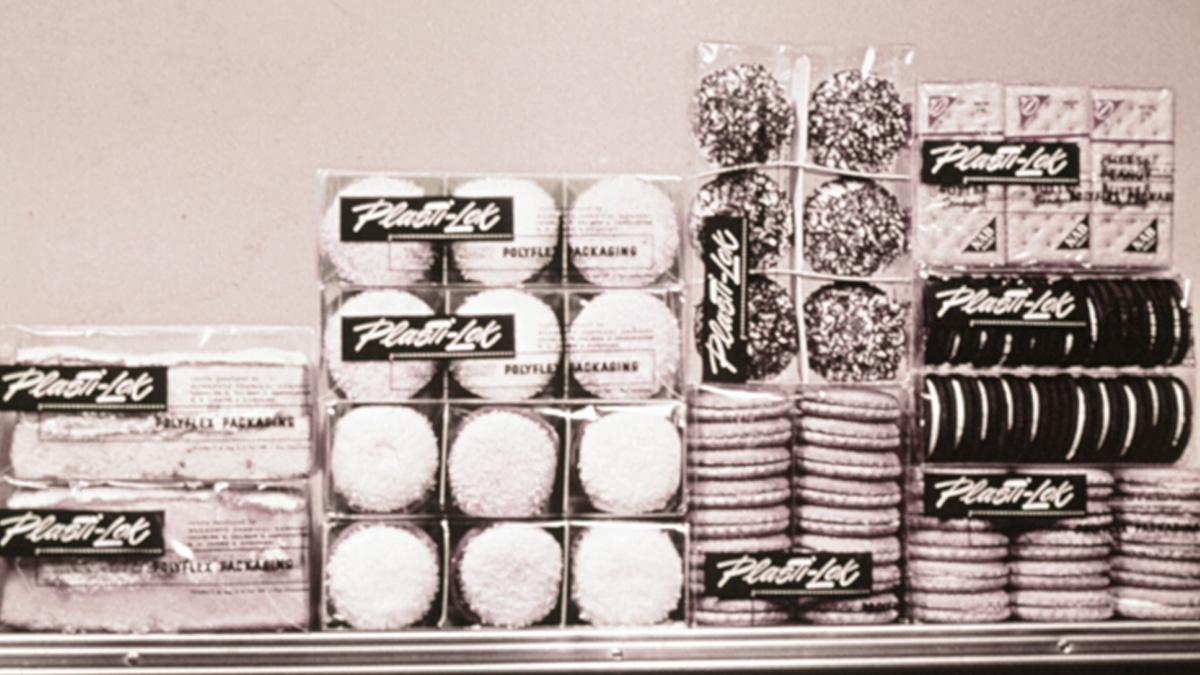
Robertson Paper Box produces 55 tons per day of linerboard.
Precision Manufacturing Emerges
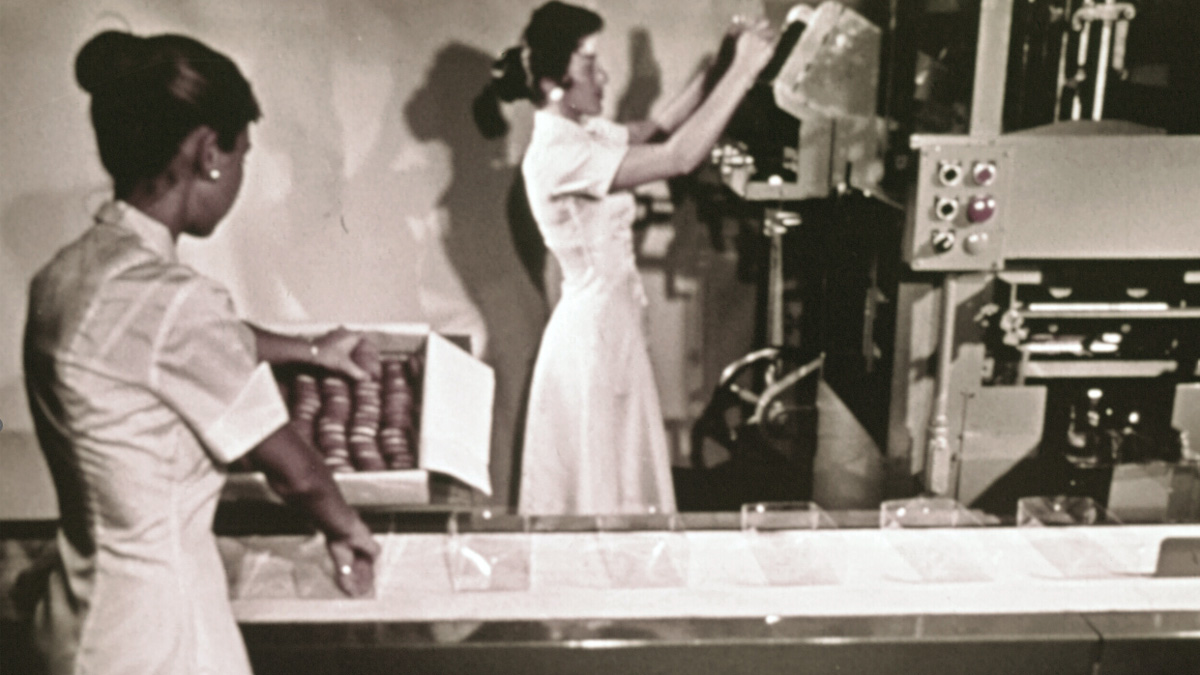
In 1963, Thomas G. Faria Corp. reused the mill complex to build marine and automotive instruments for major firms.
1980 - Present
INDUSTRIAL MODERNIZATION
1994
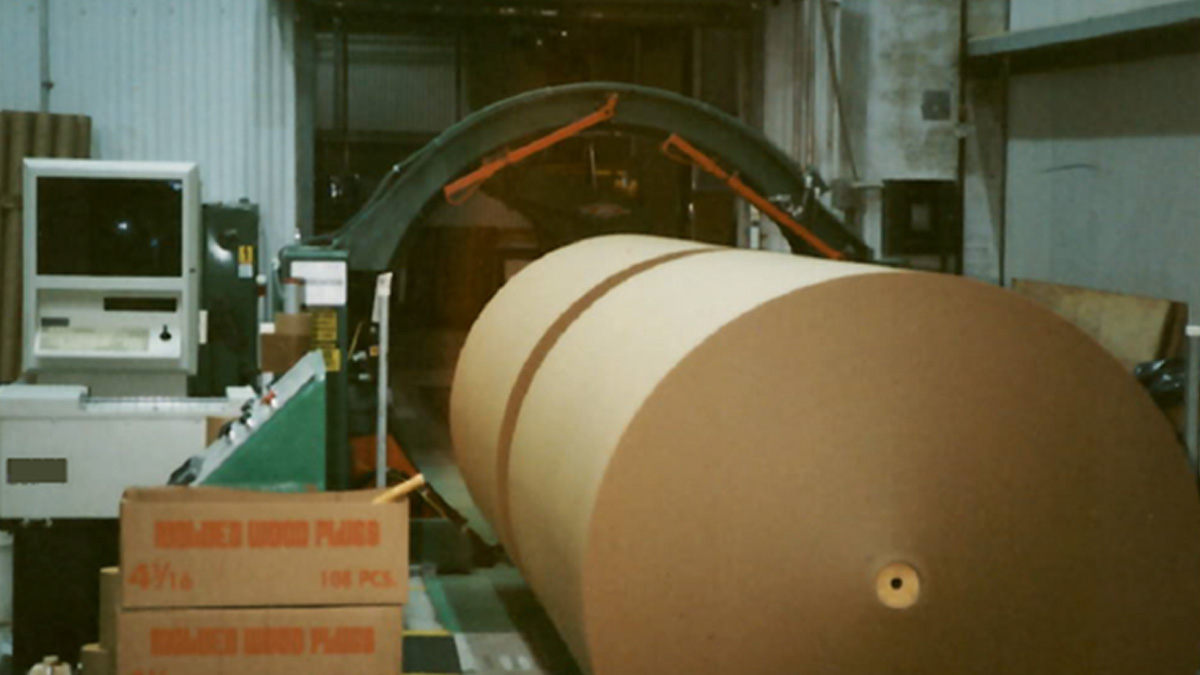
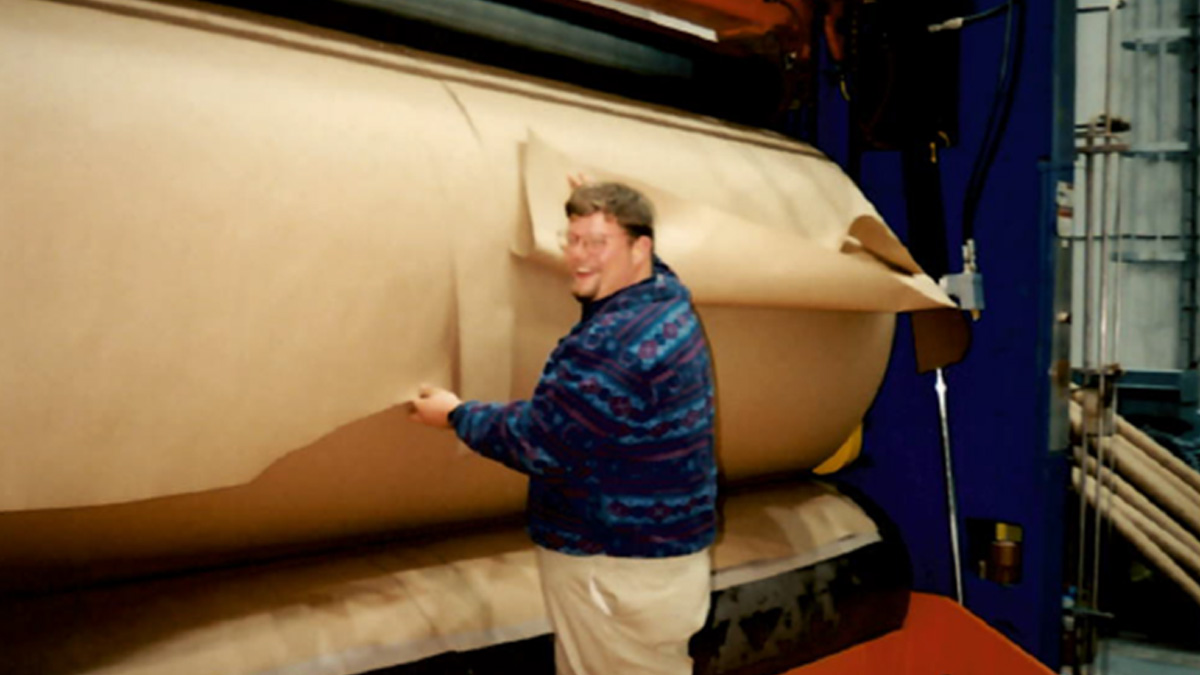
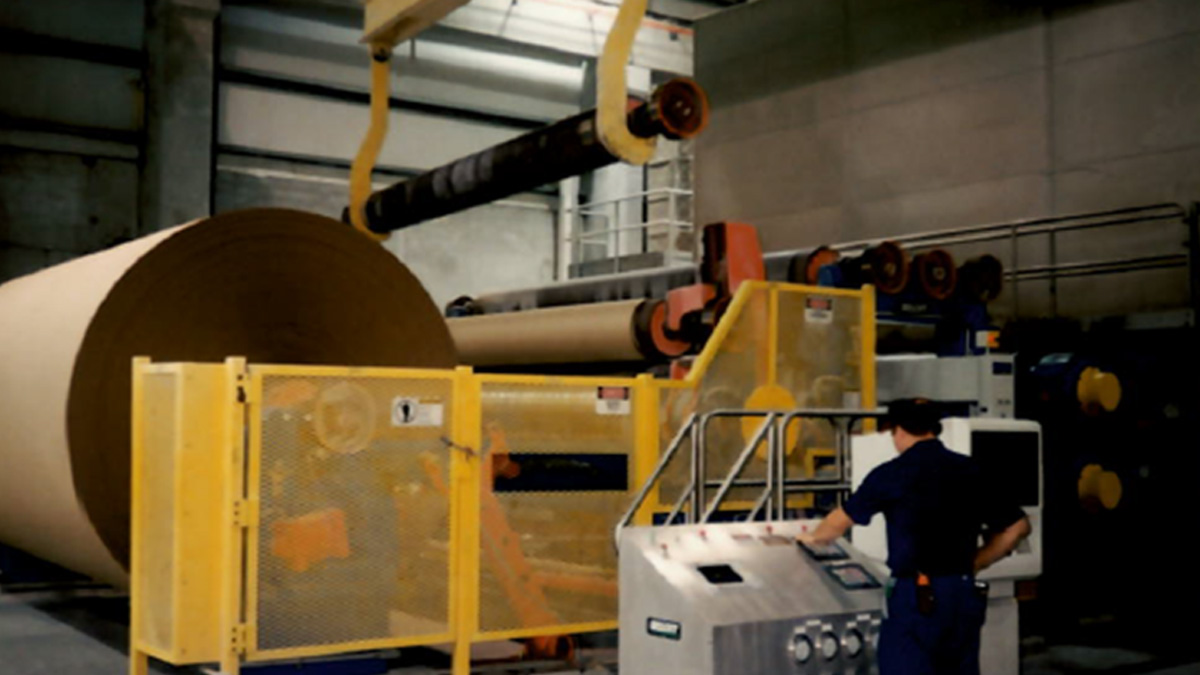
Construction of the Rand-Whitney Containerboard mill is completed, and box-making operations are discontinued as the site concentrates exclusively on linerboard production. The new mill is designed to produce 480 tons per day.
Redevelopment & Scale
The Kraft family’s redevelopment of the mill culminates with the opening of the Rand Whitney Containerboard facility, reflecting a shift toward efficient, large scale production and more environmentally responsible operations.
1993
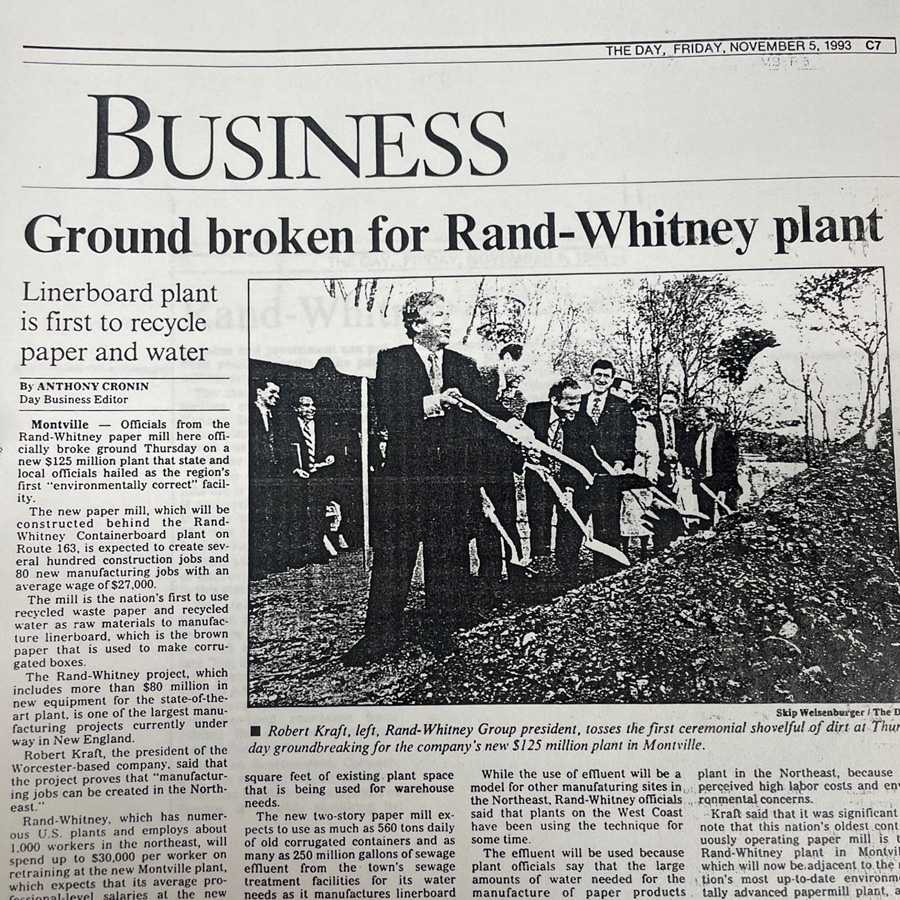
Ground is broken on a 100% recycled paper mill.
1986
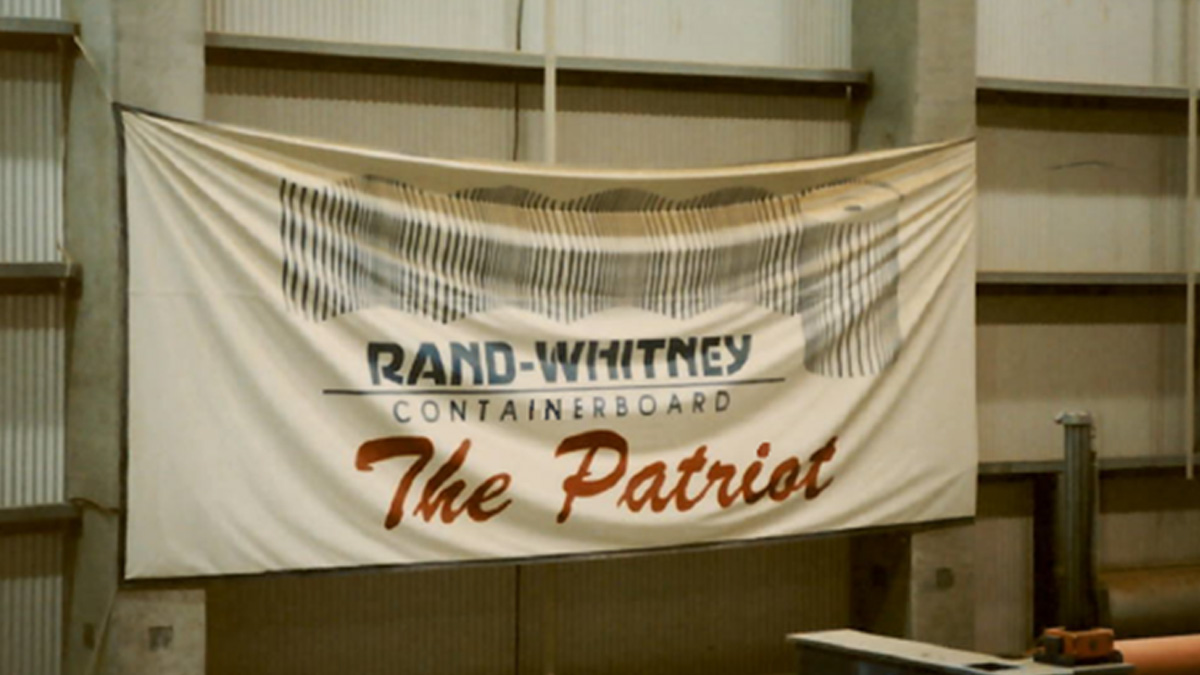
The site and business assets are acquired by the Rand-Whitney Group. The mill continues to make boxes.
2004
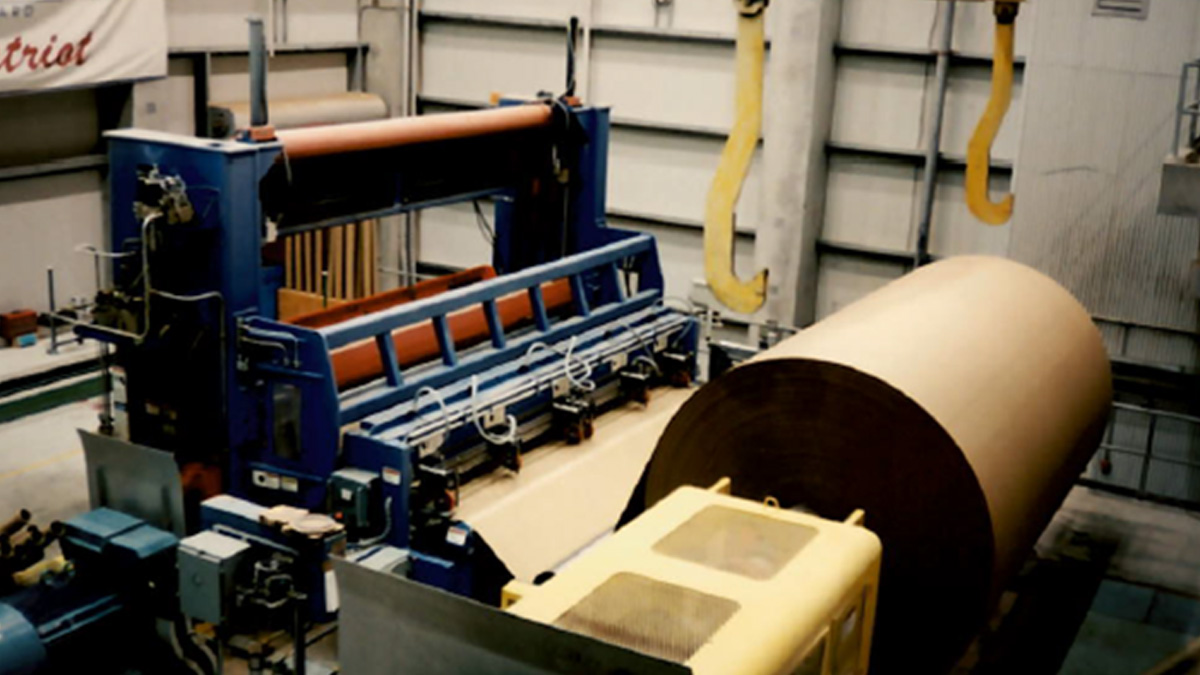
Construction of the Rand-Whitney Containerboard mill is completed, and box-making operations are discontinued as the site concentrates exclusively on linerboard production. The new mill is designed to produce 480 Tons per day.
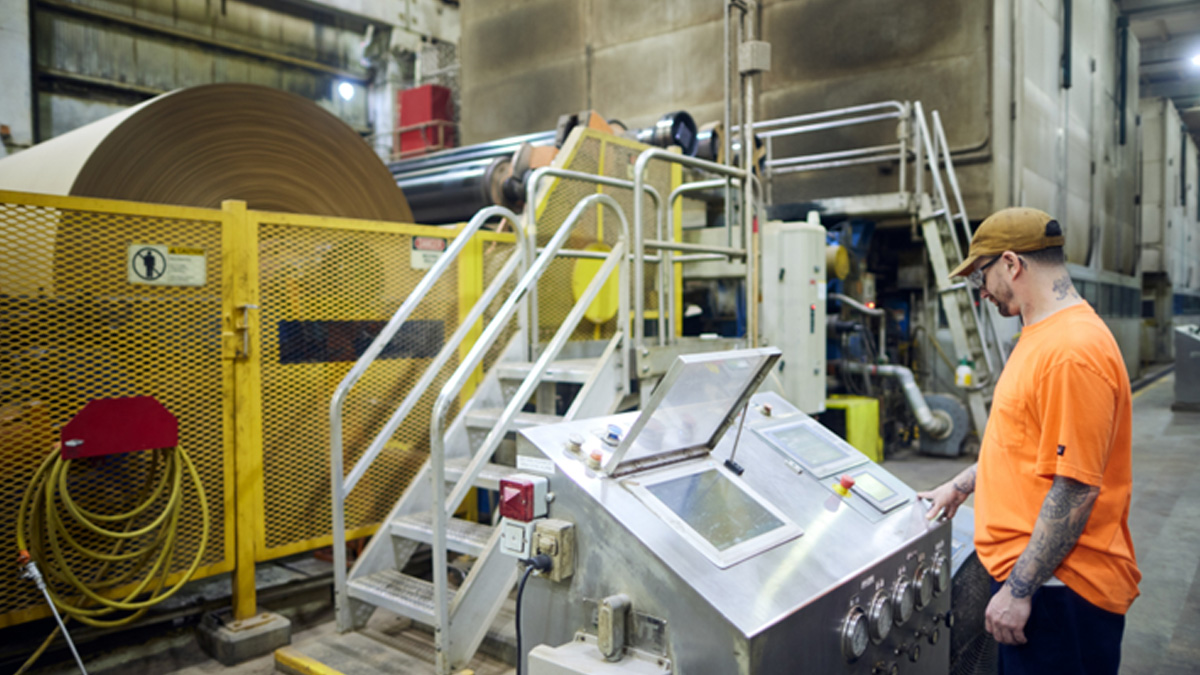
Adaptive Reuse Of Historic Mills
Mill sites that were once central to the local economy are being reimagined for new uses, such as the redevelopment of the Palmer Brothers Mill into housing and community oriented space. These projects treat the mills as cultural assets, not obsolete factories.
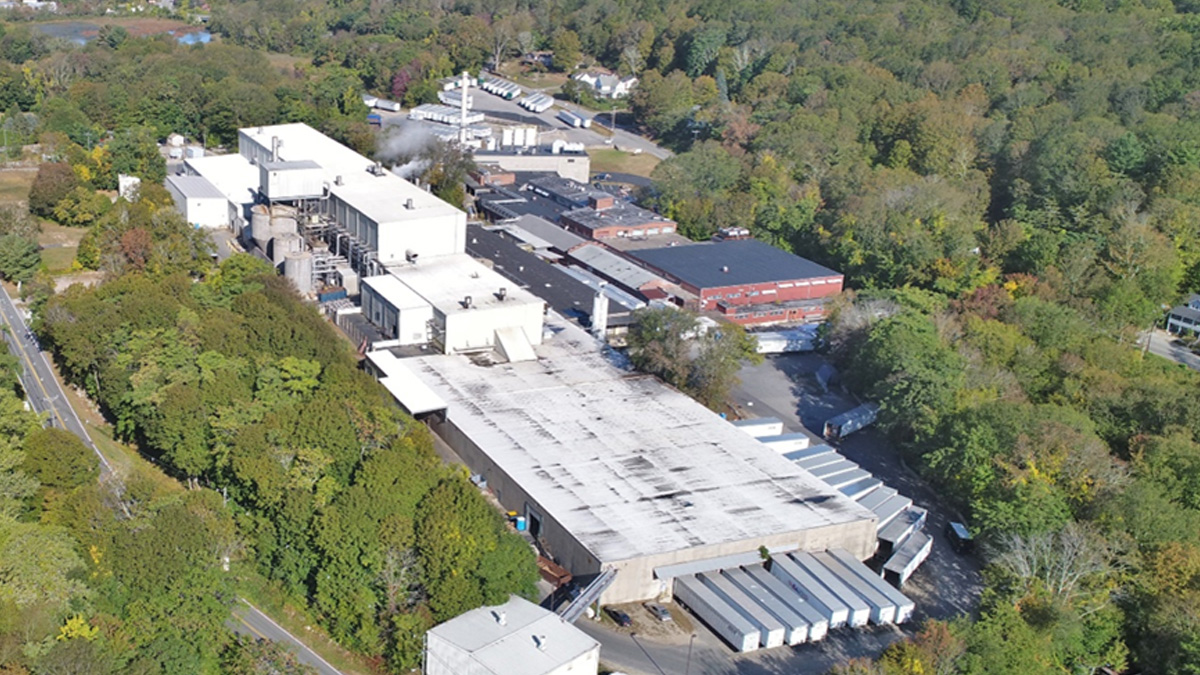
2026
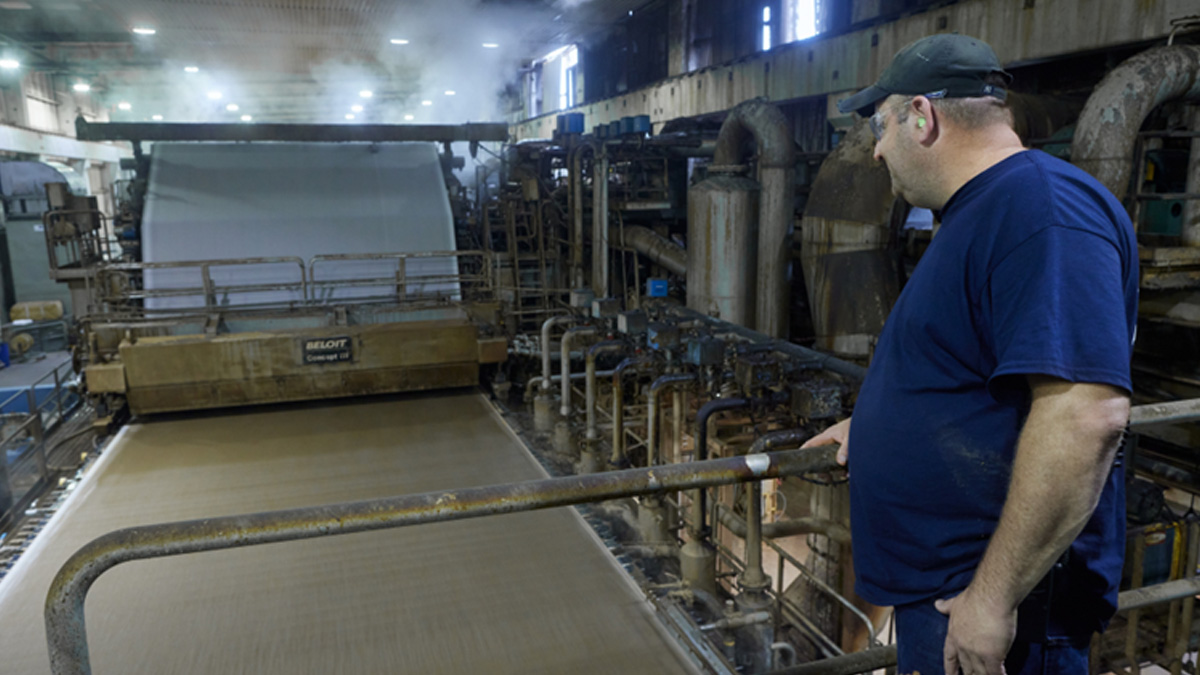
After 30 years of continuous improvement, the site routinely produces 900 tons of linerboard per day on the same paper machine built in 1994 to produce 480 tine per day.